Commercial Rolling Steel Doors
Rolling Steel Industries manufactures custom rolling steel door systems for storefronts, warehouses, parking facilities and industrial openings. Choose from band spring, torsion spring, insulated and three-hour fire-rated configurations. Contact us for sizing, available options and project-specific requirements.
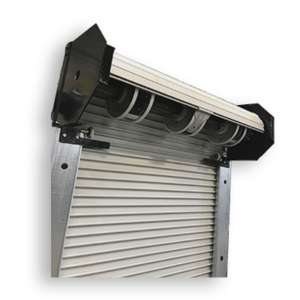
Band spring rolling steel doors provide a cost-effective solution for storefronts, storage areas, garages and other low-cycle commercial openings. The balance system supports manual operation and can be paired with solid slat curtains, open grilles, motor operators and access-control accessories.
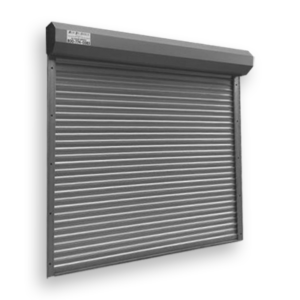
Torsion spring rolling steel doors are engineered for commercial and industrial openings, including warehouses, storefronts and parking facilities. Each system can be configured for the required opening size, curtain, guides, operation and locking needs.
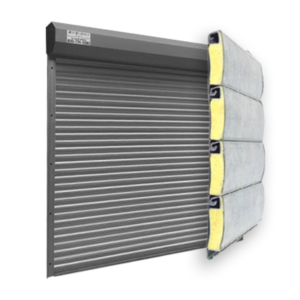
Insulated rolling steel doors use a double-steel curtain with polyurethane foam insulation to help reduce heat transfer, control interior temperatures and improve energy efficiency in commercial and industrial buildings.
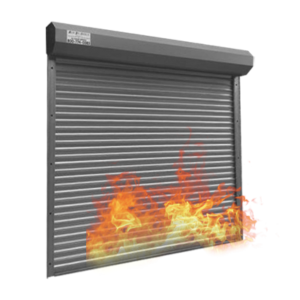
Three-hour rated rolling fire doors are designed for fire-rated commercial openings and automatic closing when activated. Contact RSI to discuss opening dimensions, operation and project requirements.
Benefits of Commercial Rolling Steel Doors
Commercial rolling steel doors are designed for openings where security, durability and efficient use of space matter. Unlike swinging doors or sectional doors that travel along ceiling tracks, the curtain coils above the opening. This helps preserve usable wall, floor and ceiling space.
Rolling steel door systems can be configured for storefronts, warehouses, service counters, parking facilities and industrial buildings. Available options may include solid steel slats, open grilles, insulated curtains, manual or motorized operation and different locking systems.
The appropriate configuration depends on the opening size, frequency of operation, required security, visibility, ventilation and insulation needs. RSI can help identify a suitable system based on the project specifications.
Security and Access Control
A rolling steel door’s security depends on the complete system, including the curtain, guides, bottom bar, locks, operator and attachment method. Interlocking steel slats travel inside secured guides, while the bottom bar helps stabilize the curtain when the door is closed.
Locking options may include hasp-and-pin locks, bottom-bar slide locks, central locks and motorized operators with access-control devices. The appropriate option depends on whether access is required from one or both sides and how the opening is used throughout the day.
For commercial projects, consider the required security level, operating frequency, emergency access and applicable building requirements. RSI can review the opening dimensions and intended application before recommending a door and locking configuration.
Space-Saving Rolling Door Design
Small business owners often do not have sizable establishments to work with. They must settle for what their budgets can afford because their limited resources still need to go toward other essential expenses. Because of their financial situation, many small businesses settle for using similarly small garages.
With limited space available, you cannot afford to use a garage door that occupies plenty of room. Installing that kind of door may make your commercial garage practically unusable. Your best bet in that situation involves installing roll up garage doors.
The clever construction of roll up doors allows them to provide protection without getting in the way. Whether they are opened or closed, the roll up doors take up minimal space. Use them to maximize the space inside your garage or the establishment itself.
The top and side elements of a roll up door’s frame are also designed to provide maximum space. They take up little room along the wall of your commercial establishment.
If replacing your broken door is turning into a logistical nightmare, remember that you can resolve that problem by installing a roll up door.
The Type of Protection You Get from 3-Hour Fire-Rated Roll Up Doors
Next, let’s discuss another way roll up doors can protect your commercial establishment. When it comes to fire protection, roll up doors are superior to the more conventional options.
How do rolling fire doors keep your establishment safe? They actually bolster your establishment’s fire protection in a few ways.
For starters, a fire-rated garage door can protect your establishment by stopping the spread of the flames. As long as the door is in the proper position, it should suppress the movement of flames and smoke throughout the building. That buys occupants of the establishment valuable time to escape.
You do not even need to close roll up fire doors in an emergency manually. Roll up doors designed to protect against fires must have fusible links that melt when exposed to high temperatures. When those fusible links give way, they automatically close the roll up doors.
According to the Steel Door Institute, steel roll up doors can only receive fire ratings if they meet the standards of the International Building and International Fire Codes and the NFPA 80. A roll up door’s fire rating must be compatible with the wall it is attached to for it to meet established standards. The wall’s location and how the establishment is used are additional factors considered when evaluating fire ratings.
You can also find the labels of testing agencies on approved rolling fire doors. Fire-rated roll up doors approved by UL Solutions should be high up on your list of target purchases.
Lastly, roll up fire doors can withstand the flames for a long time. Commercial buildings must have roll up doors that can last three hours in a fire.
Insulated Rolling Steel Doors
Insulated rolling steel doors are designed for commercial and industrial openings where temperature control and energy efficiency are important. They are commonly used in warehouses, loading areas, storage facilities and other conditioned spaces.
RSI insulated doors use a double-steel curtain with polyurethane foam insulation between the layers. This construction helps reduce heat transfer through the curtain and supports more consistent interior temperatures when the door is closed.
The complete door system also affects thermal performance. Guides, bottom-bar seals, perimeter conditions, opening size and proper installation all influence air leakage and overall efficiency. Selecting the correct configuration is especially important for buildings with regularly operating heating or cooling systems.
Insulated curtains may also provide added rigidity and help reduce sound transfer compared with a non-insulated curtain. Actual thermal and acoustic performance depends on the complete door assembly and project conditions.
Contact RSI with the opening dimensions, operating requirements and insulation needs to discuss an appropriate insulated rolling steel door configuration.
Rolling Steel Door Durability and Maintenance
Lastly, roll up doors are better than other options because of how long they last. Once these commercial doors are installed, you can count on them protecting your establishment for decades. According to Angi, steel doors can last over thirty years with proper maintenance. You can expect the same longevity from your commercial roll up doors.
The steel composition of roll up doors contributes to their longevity. Steel can withstand physical damage better than most other materials. The bumps and nicks that compromise the structural integrity of other materials over time do not affect steel as much.
You can also count on steel doors to hold up against the elements. Even if you get plenty of rain in your area, you can expect the steel roll up doors to stay in good condition. Remember, make sure they receive regular care so they can last as long as possible.
Are you looking to take advantage of the durability that only steel doors can offer? Contact us at Rolling Steel Industries today and secure the best roll up door for your commercial building!
Rolling Steel Door FAQs
The difference between a roll up door and a sectional door is the way they open. Roll up doors are stored in a compartment above the door frame. Sectional doors hang over the opening when they are not in place.
Roll up doors can indeed be insulated, and it is highly recommended that you pursue that upgrade. As noted earlier in this article, insulated roll up doors make buildings more efficient, save money, and reduce noise. They also last longer than roll up doors without insulation.
The R-value of an insulated roll up door can reach 9.0. That is a strong mark for a fixture often used for garages. It is another reason you should add a roll up door to your commercial building.